Chat with us, powered by LiveChat
Home » Education Articles » Social Emotional Learning
  • Operant Conditioning in the Classroom

Skinner’s Theory of Operant Conditioning in the Classroom

August 12, 2026|

You have likely used, or seen, teachers transform and improve behaviors using a simple sticker chart as a rewards system. You might have also seen how a student’s behavior improves after you focus on providing consistent and specific praise. Positive and negative behaviors in your classroom don’t typically come out of nowhere, and much of what your students do is actually shaped by what happens before they do it and whether the behavior is followed by something like a reward, a consequence, or a specific action. One well-studied framework for understanding student behaviors comes from B.F. Skinner’s theory of operant conditioning, which describes how what comes after the behavior is what makes that behavior more or less likely to happen. In this article, you will learn about operant conditioning and why it can be beneficial to understand in your classroom.

  • What is Rigor

What Is Rigor? Understanding Rigor Through Webb’s DOK

July 16, 2026|

As a teacher plans a reading unit for her upcoming class, she decides to increase the rigor of her planned lesson activities. Since the text she chose contains many unfamiliar words, students are tasked with reading a passage, listing the unfamiliar words, and defining them using their dictionaries. She decides that instead of requiring students to choose five words to define, she will require students to define ten words this time. (Read more)

  • Behavioral Momentum

Using Behavioral Momentum to Improve Student Behaviors

July 1, 2026|

Think about this familiar scene. In a kindergarten classroom, it is time to clean up an art activity and move to the carpet for reading time. You give the instructions for cleaning up, and most of your class starts putting materials away. One student does not; instead, she stays at her table, continuing to color and play with her materials. When you ask her to put her materials away and join the group, she says no and turns away. You repeat the direction more firmly, then walk over to her and ask her to join the group. Many teachers in this situation might continue to restate the expectations and become frustrated if one student is not able to listen. Even when classroom norms and rules are well implemented, some children will not comply for various reasons. Instead of struggling with compliance, teachers can add another approach for those students who need additional help. Called behavioral momentum, a teacher instead asks students to do smaller, easier-to-complete tasks that lead up to the main, more challenging tasks. (Read more)

  • Levels of Processing Theory

The Levels of Processing Theory

May 21, 2026|

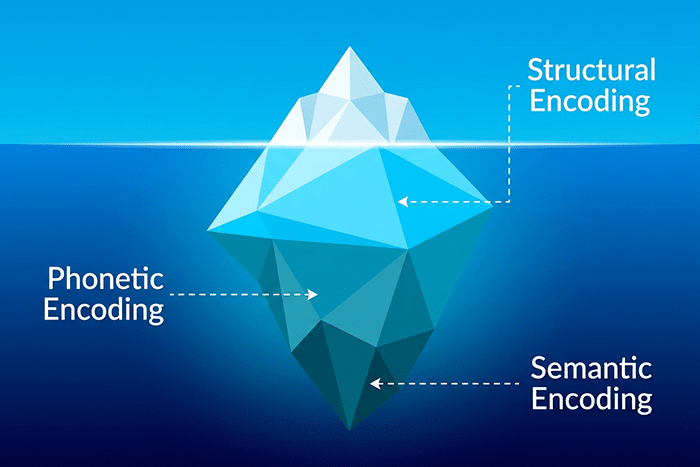
Have your students ever come into your classroom, insisting they studied and prepared for an upcoming test, yet they don’t perform nearly as well as you’d expect? While there are several reasons this could occur, one is that your students were not effectively retaining concepts to recall and apply them on an assessment. In this article, you will first learn about the three core processes of memory: encoding, storage, and retrieval, and discover briefly how those processes work together to help support learning and memory. Then, you will be introduced to one of many theories on memory, the Levels of Processing Theory, which describes how the level of processing concepts and ideas can dictate how strong your memory is.

  • Brain Breaks Webinar

Webinar: Press Pause & Power Up

April 23, 2026|

Learn about the benefits of brain breaks and explore simple brain break strategies you can implement through your lessons. You will have the opportunity to plan to implement brain breaks, leave the course with ideas and strategies to immediately add these ideas to your next lesson.

  • Kohlbergs Theory in Teaching

Understanding Kohlberg’s Theory of Moral Development and Why It’s Important for Teachers to Know

March 20, 2026|

As a teacher, you often witness your students struggling with the question of right or wrong each day in your classroom. How can I teach that student that it is important to share? Why did that other student share without being asked? Why is it that some children follow classroom rules when no one is watching, while others struggle to abide by classroom rules at all times? While some of the behaviors you witness may be due to a child’s personality and upbringing, you may also be noticing patterns of behavior aligned with their moral development.

  • Eriksons Theory in Teaching

Erikson’s Theory of Psychosocial Development: A Guide for Educators

January 21, 2026|

Understanding the development of your students helps you become a stronger educator, because you can identify specific strategies and ways to help your students that are developmentally appropriate. There are many developmental theories present to explain our growth has humans over time, but this article will focus on just one: Erik Erikson’s eight stages of development.

  • Visual Arts in the Classroom

Why the Visual Arts Belong in Every Classroom

January 16, 2026|

Most of us remember learning through images long after we forget specific words or facts. For example, you may not recall the exact definition of an animal cell, but you can probably picture its round shape or nucleus. You may not remember every detail from a history class, but you can likely recognize a famous historical painting that represents a significant event. Visual elements are often the strongest and most durable memories we form in school. Because of this, the visual arts should not be limited to the art classroom. It can instead be intentionally integrated across subjects to strengthen learning, reasoning, and creativity.

  • Social Media Cognition in Children

Social Media and Cognitive Performance

October 16, 2025|

Social Media has long been on the radar as a significant concern for childhood development. Now, a new study tracking 6,554 adolescents has revealed some interesting insights into the effects of social media usage and cognitive development. In this article, we break down the study and summarize its key findings.

  • Multi-Tiered Systems of Support MTTS Blog

Multi-Tiered Systems of Support (MTSS)

May 19, 2025|

MTSS is an acronym for Multi-Tiered Systems of Support. MTSS is a tiered framework that utilizes various student data to provide academic, social-emotional, and behavioral support to improve student educational outcomes in the school setting. The term “systems” is important in MTSS. MTSS requires the use of the entire school system, with multiple support methods, to come together in preventative interventions for students identified in need.

Your Shopping Cart

Name Price
Buying for a team or group? Select quantities on checkout page.