Chat with us, powered by LiveChat
Home » Education Articles » Testing Strategies & Prep
  • Instructional Teaching Strategies

Instructional Strategies and Teaching Strategies in Your Classroom

July 31, 2026|

Instructional strategies are research-based methods that teachers use to deliver content to students and improve their instructional practice. But it also goes further than that, because by combining classroom management strategies, assessment strategies, and other brain-based and memory-based strategies to support students, they all work together to improve the classroom and increase learning. This article serves as a resource to understand how strong instructional and other teaching strategies translate to student success in your classroom. (Read more)

  • Math Facts App

Building Math Fact Fluency

May 28, 2026|

In this article we review the importance of math fluency and automaticity, the ability to recall basic math facts on demand and solve problems with accuracy in a reasonable amount of time. We trace the three phases students pass through on the way to mastery, moving from counting to reasoning to instant recall. Strong math practice has three parts: explicit instruction that builds conceptual understanding, retrieval practice paired with spaced repetition, and immediate feedback to correct mistakes. We then introduce the Model Teaching Math Facts App, a digital tool that lets teachers and parents tailor practice across addition, subtraction, multiplication, and division through practice mode, flashcards, and printable worksheets. We close by comparing it to gamified and account-based apps and offering tips for fitting short, daily practice into your classroom.

  • Levels of Processing Theory

The Levels of Processing Theory

May 21, 2026|

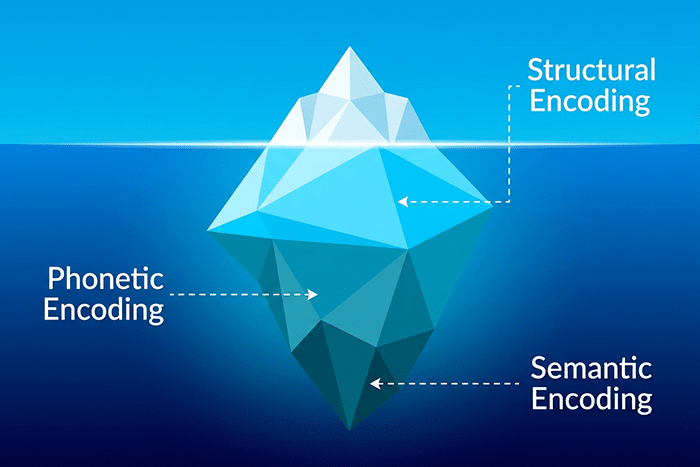
Have your students ever come into your classroom, insisting they studied and prepared for an upcoming test, yet they don’t perform nearly as well as you’d expect? While there are several reasons this could occur, one is that your students were not effectively retaining concepts to recall and apply them on an assessment. In this article, you will first learn about the three core processes of memory: encoding, storage, and retrieval, and discover briefly how those processes work together to help support learning and memory. Then, you will be introduced to one of many theories on memory, the Levels of Processing Theory, which describes how the level of processing concepts and ideas can dictate how strong your memory is.

  • Testing Effect Theory

The Testing Effect Theory

April 20, 2026|

Why take practice tests? You have likely given your students practice tests at many points in your lessons. Often, you may check in to monitor their progress and ensure they are learning the material. But how often do you assign tests as a way to help your students retrieve information and engage in the process of strengthening their memory? Practice tests can be a useful study tool for improving memory and learning. In fact, any recall activity can be used as a way for student to “test” their memory and determine what they can recall from stored knowledge in their minds. This continued practice can be an important way to improve memory and recall, and incorporating it into your lessons is another tool for you to support student understanding and improve performance in your classroom.

  • Answer Justification

Use the Answer Justification Process to Improve Your Students’ Test-Taking Skills

February 12, 2026|

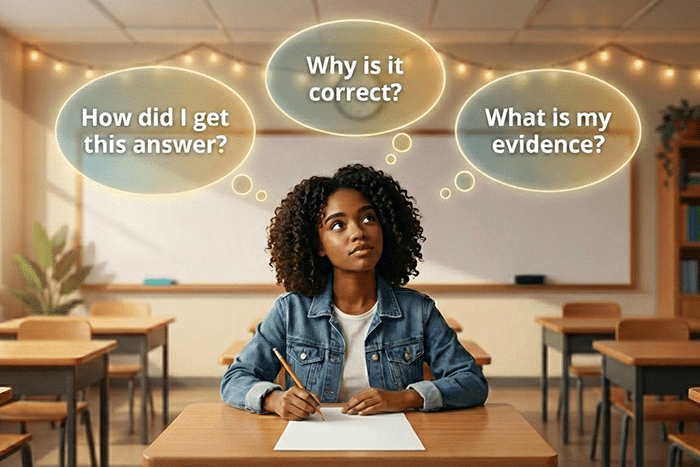
Test success is not just about students mastering content and then demonstrating it. Many students also need support in mastering specific testing behaviors that will increase the chance of their success on a test. Whether that is time management, a method for analyzing a question, or a method for selecting the correct multiple-choice option on tricky tests, testing behaviors can be improved and practiced in students as a way for them to truly demonstrate what they know and guarantee better success on assessments.

  • Fizzy Learning Geography

Using Geography Memorization as a Way to Master Historical Concepts

February 2, 2026|

In today’s history classroom, students are expected to analyze global conflicts, explain change over time, and understand the roots of major events. When students cannot locate countries on a map, history can feel abstract because they struggle to picture how borders, regions, and geography shape what happens. Intentional practice memorizing countries, cities, and regions helps students build that mental map so they can connect more deeply with history, current events, and global issues. This article explains why geography memorization matters and highlights technology tools that can support students as they learn these concepts.

  • Student Feedback

A Formula for Student Feedback

March 23, 2023|

Your students need a model for improving their work; with timely and specific feedback, it will be easier for them to work to improve in certain areas. Student feedback identifies particular areas of student performance and provides insight into their strengths and weaknesses. Therefore, feedback should be a natural component of most assessment methods you provide in your classroom. This article will give you a brief set of steps to help you build timely and targeted student feedback.

  • 3-2-1 Strategy

The 3-2-1 Strategy to Check for Student Understanding

January 3, 2023|

Ideas and strategies to check for student understanding are plentiful. You may find that you’ll use several different methods within each classroom and choose methods specific to the task students complete. A large toolbox of strategies to pull from can help ensure you understand exactly what each student knows. When designed correctly, your methods to check for student understanding can also work to support students in self-analyzing their learning to train them to think critically about what they do and do not know. The 3-2-1 Strategy is a simple yet effective method you can introduce to your students to learn what they know and to help them analyze it for themselves.

  • The Four Corners Teaching Strategy

The Four Corners Strategy-A Verbal, Active Method to Check for Understanding

May 11, 2022|

The Four Corners Strategy is a simple verbal strategy to help engage your students and improve discussion and discourse. In Four Corners, a question is presented to the class, and students are given time to think about their responses. Students will respond to the question by standing in a designated spot of the room that represents their answer choice. Typically, you allow for each corner of the four corners of your classroom to convey an answer choice. After posing your question, students will reflect on their answer and then move to their designated corner of the room. The Four Corners Strategy is a wonderful way to encourage debate and discourse in the classroom while also visualizing students' differences in ideas. By posing questions that elicit a more open-ended response, you can encourage students to think more critically about the question and their answer and prompt them to justify their choice.

Your Shopping Cart

Name Price
Buying for a team or group? Select quantities on checkout page.